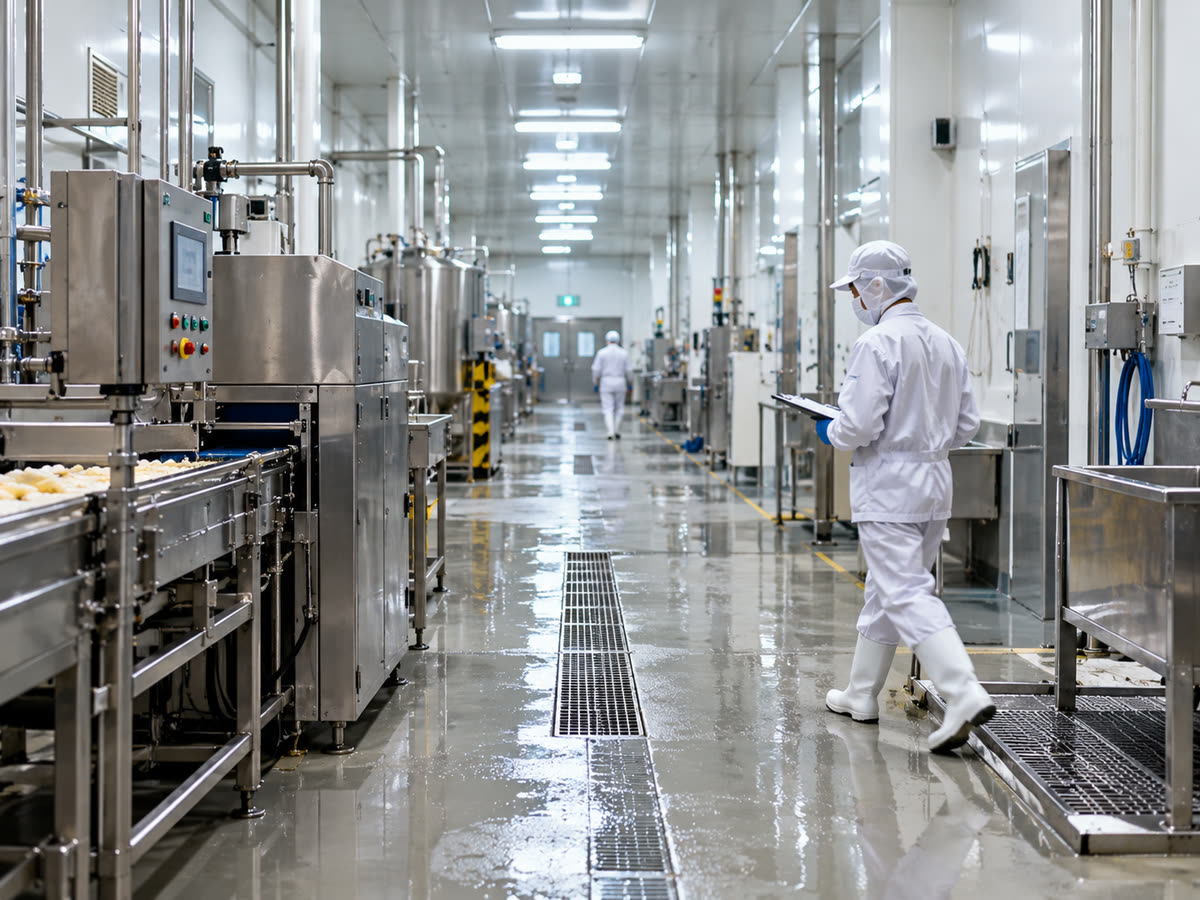
Food processing plant: the critical path from site selection to commissioning
Typical service scenario, not a specific client case. Shows how siting, permitting and equipment arrival interlock for a food plant, and where the process most often stalls.
| Content type | Typical service scenario — not a specific client case |
|---|---|
| Project region | Philippines |
This page describes a typical engagement pattern. It is not evidence that a specific project was completed, and contains no client-confidential data.
Background
A food processor planned a Philippine plant serving domestic and export markets, with strict requirements on cold chain, water quality and power reliability.
Challenges
- Three candidate parks differed widely, with opaque cost structures;
- Environmental and fire approval timelines were uncertain;
- Equipment import and utilities connection were interdependent — any delay pushed commissioning.
What we did
- Completed a three-site comparison in eight weeks, checking tariff structure, water and wastewater, logistics distance item by item;
- Organised local counsel and accountants to opine on incorporation and tax;
- Built a critical-path plan identifying 11 prerequisites and three high-risk blockers;
- Ran customs clearance and utilities connection in parallel, locking transformer and fire inspection slots early;
- Submitted weekly progress records and a blocker log.
Results
- 14 months from site selection to trial production, within the planned window;
- Power design adjusted to partial self-generation, reducing peak-shaving risk;
- Recruitment and training completed before equipment arrival, shortening ramp-up.
Note
Specific cost and capacity figures are commercially confidential and not disclosed.
Related
Philippine plant costs: five items that are routinely underestimated
Land and labour get the headlines; power, logistics, compliance, labour efficiency and FX blow the budget.
Building materials entry: from scattered orders to a stable channel
Typical service scenario, not a specific client case. Shows how channel rebuilding and access gap closure usually run for a Chinese building-materials manufacturer entering the Philippines, and where it stalls.
Supplier verification: clean registration, normal pricing, but the site did not match
Typical service scenario, not a specific client case. Shows the risk of judging a supplier on registration and a quotation alone, and which items an on-site verification must cover.